
 EN
EN



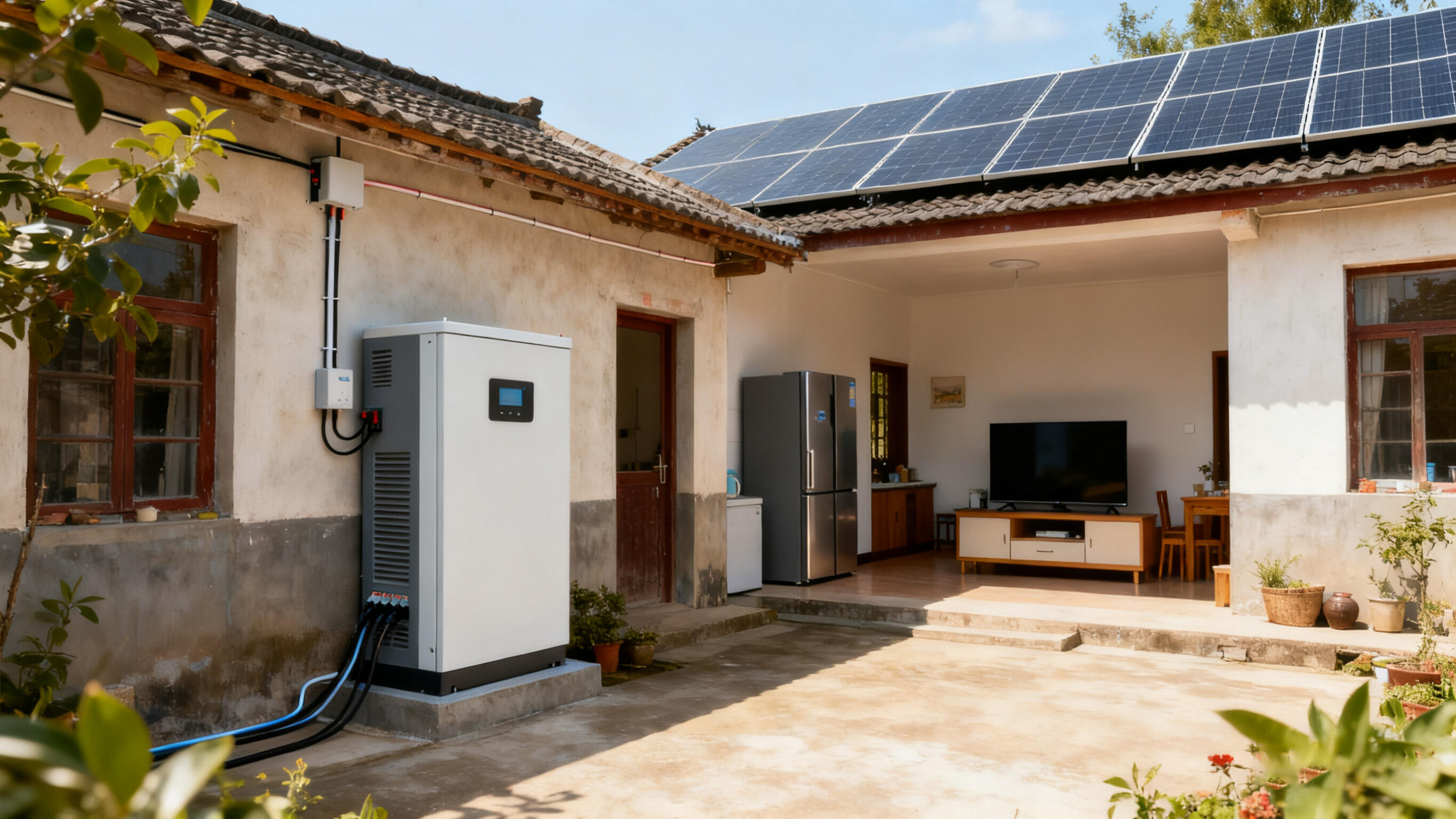
What Are Off-Grid Solar Systems and How Do They Enable Self-Sufficiency?
Solar systems that work off the grid give people total control over their own power needs. They bring together solar panels, batteries to store extra energy, and inverters all in one package that runs itself. The way these setups work is pretty straightforward really: they take sunlight and turn it into usable electricity, save what's left over so there's still power at night, and completely remove the need to depend on regular power companies. That makes such systems especially good for places far from city centers or when emergencies strike and normal power goes out. According to studies done by Sundance Power on green energy solutions, this kind of setup keeps the lights on no matter how long the main power grid might be down. Today's off grid systems get their independence right because each part is sized just right for the job. Most include those newer lithium batteries along with intelligent controllers that manage charging efficiently, making sure nothing gets wasted.
Key Differences Between Grid-Tied, Hybrid, and Fully Off-Grid Solar Energy Systems
- Grid-Tied: Requires utility connection, exports surplus energy, but fails during outages
- Hybrid: Combines grid access with limited battery backup for partial outage protection
- Off-Grid: Fully independent operation with battery banks storing 2–3 days of emergency reserves
While grid-tied systems dominate urban areas, off-grid configurations prevent $740/month average outage losses for businesses (Ponemon 2023) through guaranteed uptime.
The Growing Demand for Energy Resilience During Grid Outages
The rise in extreme weather combined with older infrastructure has pushed off-grid solar installations up by around 215 percent since 2020 according to recent data. Many homeowners now look for solar setups that can keep essential medical equipment running and phones charged when storms hit hard. A recent report from The Environmental Blog backs this trend, showing exactly what people need most during emergencies. Meanwhile companies like Anern are making waves in remote areas where electricity is scarce. Their projects show how solar power actually works wonders for communities living far from grid connections, cutting down on those noisy diesel generators by nearly 92%. What was once considered luxury tech is becoming necessity for millions facing unpredictable climate conditions every day.
Core Components of a Home Solar Energy System for Reliable Off-Grid Power
Solar Panels, Inverters, Charge Controllers, and Mounting Systems: A Functional Overview
A fully off-grid solar energy system relies on four primary components to generate and regulate power:
- Solar panels convert sunlight into direct current (DC) electricity. High-efficiency models capture 20–23% of solar irradiance, according to 2023 SolarTech reports, making them critical for energy-scarce environments.
- Inverters transform DC power into alternating current (AC) for household appliances. Smart inverters optimize output during fluctuating weather.
- Charge controllers prevent battery overcharging, with modern Maximum Power Point Tracking (MPPT) controllers achieving 98% efficiency.
- Mounting systems secure panels to roofs or ground frames while minimizing wind resistance.
Proper component matching ensures up to 30% higher energy yields, as shown in grid independence studies.
The Critical Role of Battery Storage in Off-Grid Solar Applications
Battery banks serve as storage units for excess energy generated during the day, which gets used at night or when clouds block sunlight. Most new setups rely on lithium-ion batteries these days because they last around 4,000 to 6,000 charge cycles according to NREL research from 2023. These beat old fashioned lead-acid batteries by about three times in terms of longevity. Take a typical 10 kWh battery bank for instance it should keep lights on and refrigerators running for roughly 12 to 18 hours if there's no power coming from the grid. Advanced models come equipped with thermal management features that cut down fire hazards significantly too, with some studies showing an impressive 80% reduction based on data released by the Energy Safety Council in 2024.
Integrating Solar Panels with Battery Storage (Solar + Storage) for Uninterrupted Power
Putting together solar panels with battery storage works best when there's good balance between energy production and usage. Most modern systems come equipped with these special inverters that work both ways. They basically tell the system to use as much solar power as possible first thing. Any extra electricity gets stored in batteries instead of just going out to other devices around the house. The whole point is keeping things running even when the main power goes down. Some of these setups have been tested pretty thoroughly and they stay online about 99.8 or 99.9 percent of the time according to manufacturer claims. There are also smartphone apps now that let homeowners watch how their system is performing minute by minute. People can see exactly where their power is coming from and tweak their habits accordingly so they don't need to pull as much electricity from the grid.
Choosing the Right Energy Storage: Lithium-Ion vs. LiFePO4 Batteries for Solar Energy Systems
Comparing Lithium-Ion and LiFePO4 Battery Technologies for Home Solar Systems
LFP batteries, also known as lithium iron phosphate, are becoming increasingly popular as a safer option than standard lithium-ion (NMC) batteries for use in solar power setups. Sure, NMC packs more punch with energy densities around 150 to maybe 200 Wh per kg, but LFP stands out when it comes to staying cool under pressure and lasting longer over time. Most folks report getting about 6,000 full cycles before performance drops below 80%, whereas NMC batteries usually last somewhere between 3,000 and 4,000 cycles. Looking at recent market reports, safety remains a top concern for many installers. The unique chemistry of LFP batteries actually cuts down on fire hazards significantly too. Some studies suggest they reduce the risk of catching fire by roughly 70% even when temperatures spike during operation.
Cycle Life, Safety, and Cost Efficiency of Modern Battery Storage for Solar Energy Systems
The service life of LiFePO4 batteries typically ranges between 15 to 20 years, which is significantly better than the 10 to 12 year lifespan commonly seen with NMC batteries. These lithium iron phosphate cells maintain their performance remarkably well too, delivering around 95% round trip efficiency even after going through 5,000 charge cycles. That's pretty impressive when we compare it to NMC batteries that only manage about 85% efficiency in similar situations. While the initial investment for LiFePO4 systems does come in at roughly 15 to 25% higher than standard options, the long term savings make up for this difference. Over time, these batteries actually result in about 30% lower total ownership costs because they simply don't need replacing as often. Take a 10 kWh system for example. Someone who installs a LiFePO4 version instead of an NMC alternative would save approximately $2,400 on replacement costs alone during those two decades of operation. This makes them particularly attractive for applications where maintenance access might be difficult or costly.
Sizing Battery Storage Based on Daily Electricity Usage
Getting the right size system begins by looking at how much power gets used each day. Take a home that goes through around 25 kWh per day as an example. To account for normal wear and tear on batteries, most experts recommend aiming for about 33 kWh storage capacity since batteries typically only get used up about 75% before needing recharge. The good news is LiFePO4 batteries offer better efficiency here compared to standard NMC options. With LiFePO4, homeowners can actually use between 80 to 100 percent of what's stored, whereas NMC batteries usually only deliver about 60 to 80 percent usable power. When planning for three days without grid connection, combining those 25 kWh daily needs with something like a 12 kW solar installation makes sense. This setup keeps things running smoothly when the electricity goes out for longer periods, plus it helps avoid wasting excess energy that would otherwise go unused.
Assessing Household Energy Needs to Maximize Solar Independence
Calculating Daily Electricity Usage to Match Solar Power Generation
Getting an accurate read on energy usage starts by looking at at least twelve months worth of utility statements to figure out what's normal for the home. The focus should be on actual kilowatt hour numbers instead of just the dollar amounts shown on those bills. With today's smart home energy monitors, people can see exactly which appliances are using electricity down to the individual device level. Most homes find that heating and cooling systems eat up between forty to sixty percent of all power consumed. When calculating how much electricity a house needs each day, it helps to add up what different appliances use hourly. Take a standard three ton air conditioner for instance it generally guzzles around three to four kilowatt hours every single day. And don't forget to plan ahead for things like electric vehicle charging stations which can add anywhere from six to thirteen extra kilowatt hours daily when determining system requirements.
Strategies for Maximizing Self-Consumption and Reducing Grid Reliance
To get the most out of solar power, it makes sense to schedule big energy users when the sun is at its strongest, roughly between 10 AM and 3 PM. Newer battery control systems actually figure this out on their own, pushing priority to whatever runs on sunshine rather than pulling from the grid. In places where there's plenty of sun, this approach cuts down on grid dependency somewhere around 80% according to some studies. When solar output drops off, smart breaker systems kick in with what they call phased load shedding. These setups basically shut down or reduce power to less important circuits first, keeping electricity flowing to essential equipment while saving batteries for when they're really needed.
Tools and Methods for Accurately Assessing Energy Needs
Advanced tools simplify solar planning:
- IoT energy monitors track real-time usage across 20+ circuits
- PVWatts Calculator (NREL) estimates location-specific solar yield
- Battery sizing matrices factor in depth-of-discharge limits and efficiency losses
Households using detailed consumption audits achieve 22% faster ROI on solar energy systems by right-sizing components. Cloud-based monitoring platforms now provide AI-driven usage forecasts, automatically adjusting system parameters to match evolving consumption patterns.
Designing and Sizing a Custom Off-Grid Solar Energy System for Long-Term Independence
Step-by-Step Process for Designing a Custom Solar Energy System
Designing an effective solar power setup begins with taking a good look at how much electricity gets used every day. People who want to go solar need to figure out what appliances consume power and when they typically run throughout the day. Then it's wise to add about 20% extra capacity just in case things don't work out perfectly or if there are unexpected changes down the road. When picking actual solar panels, most experts recommend going for something that produces roughly 25% more than what was calculated as needed. This helps cover those gray winter days when sunlight isn't so abundant. There are various apps and online tools available now that track energy usage patterns across different seasons, which makes adjusting estimates much easier over time. At the end of the planning process, making sure everything works together properly becomes really important. Matching top quality inverters with modern lithium batteries gives around 90% efficiency when storing and using stored electricity, though real world results might vary depending on installation conditions and local climate factors.
Matching Solar Panel Output with Household Consumption Patterns
Households averaging 30 kWh/day require 6–8 kW solar arrays in sun-rich regions, but this increases to 8–10 kW in cloudy climates. For example:
| Appliance Group | Daily Usage (kWh) | Solar Output Needed (kW) |
|---|---|---|
| Lighting + HVAC | 12 | 3.5 |
| Kitchen | 10 | 2.8 |
Smart load controllers automate energy allocation during peak production, diverting excess power to batteries or non-essential circuits.
Planning for Scalability and Future Expansion
When setting up off grid power solutions, going modular makes sense. Stackable battery packs and solar racking that can be expanded later are essential features. Take a standard 5kW setup for example. If built with around 150% extra capacity from day one, most installations can easily add another couple of panels when demand increases down the road. Standardized connectors throughout the system and inverters that can be programmed save headaches during upgrades since there's no need to tear everything apart. The cost savings really add up too. Real world data shows that systems built with scalability in mind typically cut long term expenses somewhere between 18% and 22% compared to those stuck with fixed configurations from the start.
Common Pitfalls in System Sizing and How to Avoid Them
- Undervaluing seasonal variation: Winter production in northern latitudes can dip 40–60% below summer levels
- Ignoring battery degradation: LiFePO4 batteries lose 20% capacity after 3,500 cycles vs. 50% for lead-acid
- Overlooking phantom loads: Always-on devices consume 8–12% of total energy
Conduct biannual performance reviews using wireless monitoring tools to recalibrate system output against evolving needs.
FAQ
What is an off-grid solar system?
An off-grid solar system is a setup that allows individuals or businesses to be independent from the local grid. It includes solar panels, batteries for energy storage, and inverters to change direct current into alternating current used by household appliances.
How does an off-grid solar system work without a grid connection?
Solar panels convert sunlight into electricity which is used immediately or stored in batteries. Inverter systems convert this electricity for household use, allowing essential appliances to run independently without grid reliance.
How long do the batteries last in an off-grid solar system?
New lithium-ion batteries typically last 4,000 to 6,000 cycles, while lithium iron phosphate batteries can last longer with up to 6,000 cycles before their performance drops.
Table of Contents
- What Are Off-Grid Solar Systems and How Do They Enable Self-Sufficiency?
- Key Differences Between Grid-Tied, Hybrid, and Fully Off-Grid Solar Energy Systems
- The Growing Demand for Energy Resilience During Grid Outages
- Core Components of a Home Solar Energy System for Reliable Off-Grid Power
- Choosing the Right Energy Storage: Lithium-Ion vs. LiFePO4 Batteries for Solar Energy Systems
- Assessing Household Energy Needs to Maximize Solar Independence
- Designing and Sizing a Custom Off-Grid Solar Energy System for Long-Term Independence
- FAQ