
 EN
EN



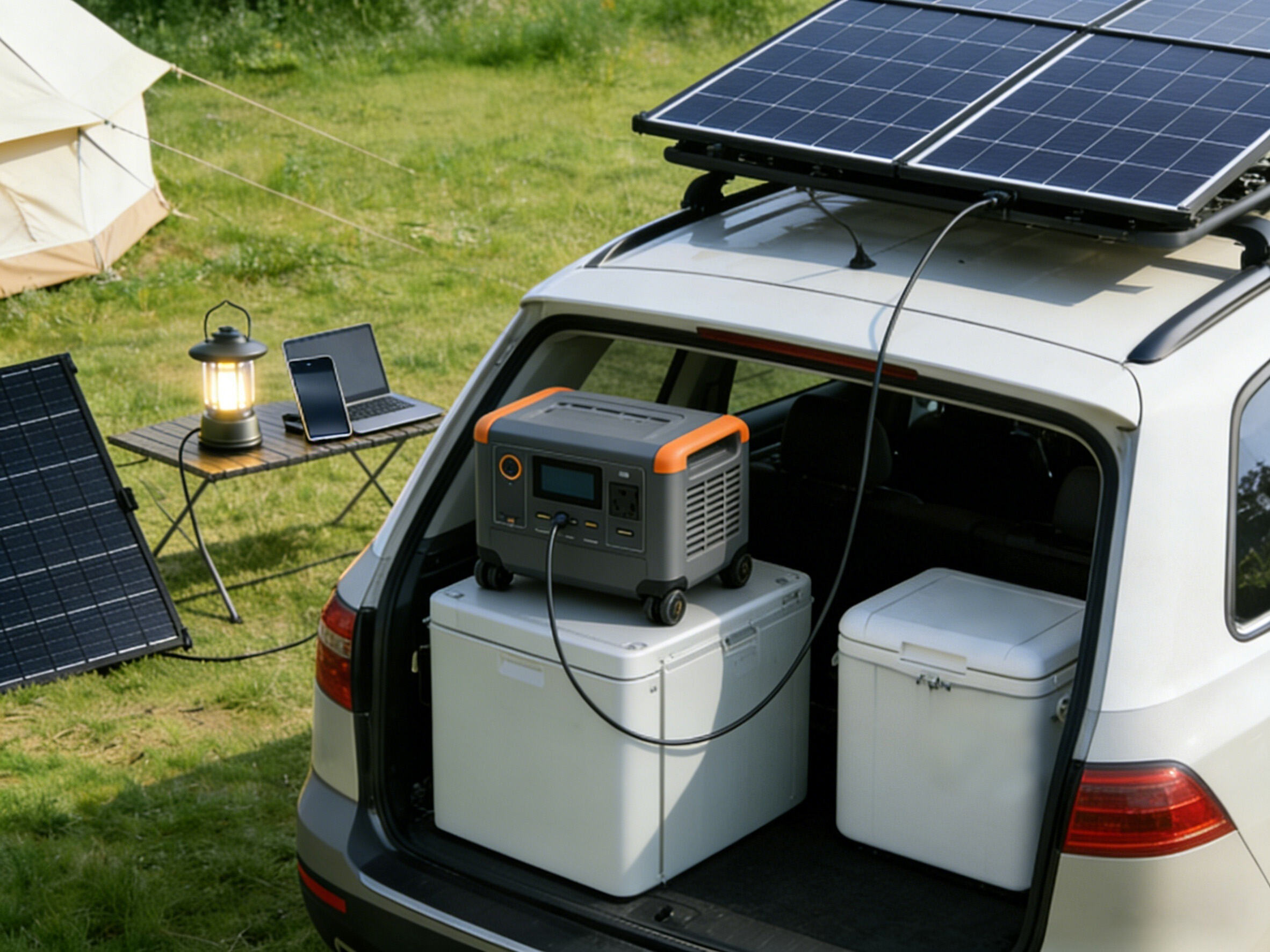
How Portable Solar Power Stations Work: Solar Input, Battery Storage, and Clean AC Output
The Hybrid Energy Architecture Explained
Solar power stations work by converting sunlight into usable electricity through three main steps. The first step happens when those solar panels soak up sunlight and turn it into what's called direct current or DC power thanks to something scientists call the photovoltaic effect. Most modern units send this DC power to their internal batteries, which are usually made with lithium iron phosphate chemistry because they don't overheat easily, last longer than other options, and just plain work better for most people. When someone needs electricity, the system uses a special device called a pure sine wave inverter to change that stored DC power back into regular household current at 120 volts. This works great for charging phones, running laptops, even powering some medical equipment and kitchen gadgets while camping or during emergencies. What makes these systems so useful is that they create power without making noise or pollution. Smart electronics inside monitor how much power comes in from the sun and stops charging before things get damaged, which helps everything run smoother and last longer overall.
Lithium Battery Safety and Cycle Life in Real-World Conditions
Modern portable power stations come with built-in safety features that ensure both reliability and long-term performance. These devices rely on sophisticated battery management systems that keep a constant watch on things like voltage levels, current flow, and temperature changes. When problems arise such as overload situations, short circuits, or dangerously high heat, the system automatically shuts down to prevent damage. The LiFePO4 battery cells used in these units have a natural resistance to dangerous thermal runaway incidents, which makes them much safer compared to traditional lithium-ion alternatives. This matters a lot when people need backup power during emergencies or when operating equipment in hot climates. According to research published by the National Renewable Energy Lab in 2023, these batteries can maintain at least 80 percent of their original capacity even after going through over two thousand complete charging cycles under normal usage conditions. How long they actually last in practice tends to hinge on several important variables including...
| Factor | Impact on Lifespan | Mitigation Strategy |
|---|---|---|
| Depth of Discharge | >80% daily use halves cycles | Maintain 20–80% charge range |
| Temperature | >113°F degrades cells 2x faster | Built-in thermal regulation |
| Charging Speed | Ultra-fast charging reduces longevity | Adaptive algorithms & cooling |
Ruggedized enclosures, IP65-rated seals, and wide operating temperatures (–20°C to 60°C / –4°F to 140°F) further ensure durability across seasons and terrains—supporting multi-year field deployment without performance compromise.
Top 3 Outdoor & Emergency Use Cases for Portable Power Stations
Portable power stations deliver mission-critical energy independence where grid access is unreliable or nonexistent. Their silent operation, zero emissions, and plug-and-play simplicity make them uniquely suited for both recreation and resilience.
Camping and Overlanding: Powering Fridge, Lights, and Comms Off-Grid
On those long backcountry adventures, having reliable power means the difference between staying safe and comfortable versus struggling through rough conditions. Today's portable power stations can handle all sorts of essential gear without making any noise or giving off fumes. Think about it: keeping food fresh in a 12V fridge, lighting up camp at night with LEDs, sending messages via satellite, navigating with GPS, and even powering cameras for those epic shots. The battery capacity varies quite a bit too, starting around 300 watt hours for short weekend getaways and going all the way up to 2,000 watt hours for those serious overlanders planning months on the road. Throw in some foldable solar panels and suddenly we're talking about complete independence from grid power, no matter how far out someone ventures. These compact units fit right into vehicles and work surprisingly well in extreme weather conditions, from freezing mountain passes down to scorching desert sands where temperatures can reach 60 degrees Celsius.
Disaster Recovery: FEMA-Aligned Deployment and Rapid Grid-Out Response
When nature throws its worst at us through hurricanes, wildfires, or brutal winter storms, portable power stations become crucial for keeping things running inside our homes. These devices fit right into what FEMA recommends for emergency readiness, kicking in almost instantly when the power goes down. They keep life-saving equipment like CPAP machines going, ensure emergency radios stay on air, and most importantly, keep cell phones charged so people can call for help if needed. According to recent data from the U.S. Energy Information Administration (2023), nearly 6 out of 10 power outages across America last longer than 12 hours, making quick response absolutely vital. What sets these apart from traditional gas generators? No noise pollution, no dangerous fumes even during bad air quality events, and definitely no need to worry about constantly refilling fuel tanks. The smaller versions work great in temporary shelters or regular households, while bigger models can actually keep medicines cold, run medical tests at disaster sites, and maintain communication channels for first responders until regular electricity returns.
Maximizing Solar Charging Efficiency for Your Power Station
MPPT Controllers and Panel Compatibility: Avoiding Voltage Mismatches
MPPT controllers have become pretty much standard equipment in high-end portable power stations these days, and there's actually a solid reason behind that trend. These controllers work differently than the basic PWM models out there. What makes MPPT special is how it constantly tweaks both voltage and current levels to pull about 30% extra usable energy from those solar panels. This works particularly well when sunlight isn't perfect or temperatures fluctuate throughout the day. Want to get the most out of your investment? Make sure the panels match properly with the controller system. Compatibility really matters here if we're talking about maximizing performance.
- Voltage alignment: Panels must produce an open-circuit voltage (Voc) above the station’s maximum input voltage threshold—and ideally 20–50% higher than the battery’s nominal voltage (e.g., 18–22V Voc for a 12V system) to ensure efficient MPPT tracking.
- Current limits: Exceeding the controller’s rated amperage triggers protective shutdowns—so always verify panel short-circuit current (Isc) against station specs.
- Temperature compensation: MPPT algorithms adjust voltage thresholds in real time to protect LiFePO4 batteries from overvoltage stress in hot climates.
Mismatched configurations—such as pairing high-Voc thin-film panels with low-input-voltage controllers—can slash yield by 40% or cause repeated fault cycling.
Real-World Yield: What 100W–200W Foldable Panels Actually Deliver Per Day
Manufacturer wattage ratings reflect ideal lab conditions—not the variable reality of outdoor use. Actual daily harvest depends heavily on environment, setup, and maintenance:
| Conditions | 100W Panel Yield | 200W Panel Yield |
|---|---|---|
| Full sun, optimal angle | 500–600Wh | 1,000–1,200Wh |
| Partial cloud, fixed tilt | 300–400Wh | 600–800Wh |
| Heavy overcast | 80–150Wh | 160–300Wh |
Key efficiency levers:
- Angling: Adjusting panel tilt every 2 hours increases daily yield by ~25% versus fixed mounting.
- Cleanliness: Dust and debris reduce output by 15–20% per month—wiping panels weekly restores peak performance.
- Temperature: Output declines by ~0.5% per °C above 25°C (77°F); mounting panels with airflow gaps mitigates heat buildup.
- Location: Solar insolation varies widely—Arizona yields ~30% more winter energy than Washington state.
Because real-world conditions consistently underdeliver theoretical ratings, oversizing your solar array by 20–30% is a best practice for reliable daily replenishment.
FAQ
How do portable solar power stations convert sunlight to electricity?
Portable solar power stations use solar panels to convert sunlight into direct current (DC) power through the photovoltaic effect. This power is stored in internal batteries as DC power and is converted back into alternating current (AC) power using a pure sine wave inverter when needed for use.
What makes lithium iron phosphate batteries preferred in these stations?
Lithium iron phosphate batteries are preferred due to their safety, resistance to overheating, long cycle life, and general robustness, making them more reliable and safer, especially in emergency power situations.
Can portable power stations be used in extreme climates?
Yes, due to ruggedized enclosures, thermal regulation, and wide operating temperatures, portable power stations can be effectively used across various climates, from cold mountain regions to hot desert conditions.
How can I ensure my solar power station charges efficiently in different weather conditions?
Using MPPT charge controllers can enhance efficiency by adjusting to different sunlight and temperature conditions. It's also crucial to ensure proper panel alignment and cleanliness and consider local solar insolation levels when setting up the system.