
 EN
EN



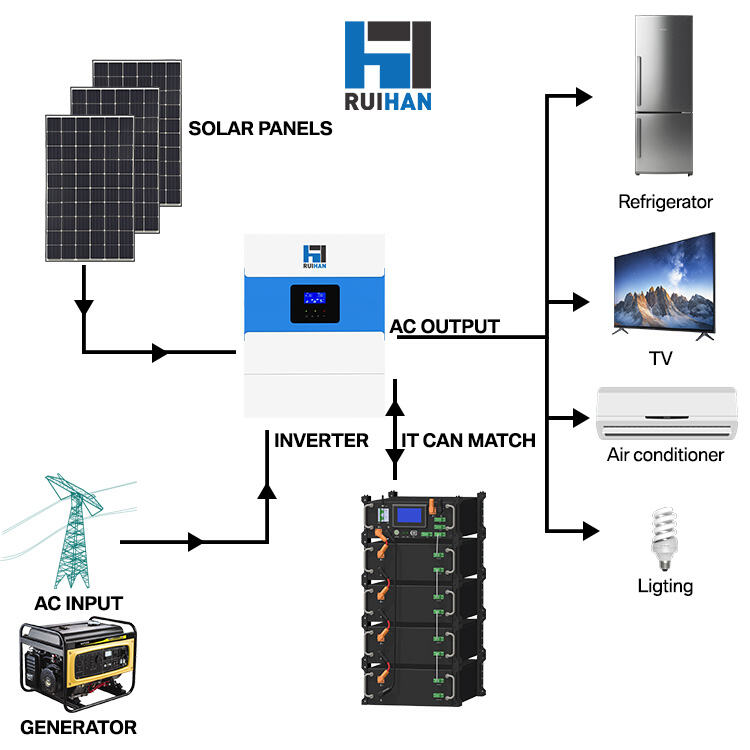
Off-Grid Solar Energy Systems: Full Autonomy Without Utility Dependence
How Off-Grid Solar Energy Systems Create Self-Sustaining Power Loops
Off-grid solar energy systems achieve complete energy independence by integrating photovoltaic panels, battery storage, and inverters into a closed-loop ecosystem. Solar panels convert sunlight into electricity during daylight hours, while excess energy charges high-capacity batteries—most reliably using LiFePO₄ chemistry—for use at night or during low-irradiance periods. Advanced charge controllers prevent overcharging, and inverters convert stored DC power to usable AC electricity. This creates a self-sustaining cycle:
- Energy generation → Storage → Consumption → Regeneration
By eliminating grid reliance, homeowners avoid utility rate fluctuations and regional outages that cost U.S. businesses an average of $740,000 annually (Ponemon Institute, 2023 Cost of Data Center Outages Report). System autonomy hinges on precise sizing of both solar arrays and storage capacity—calibrated not just to average demand, but to worst-case seasonal conditions and critical load priorities.
Real-World Validation: Montana Homestead Running 100% on 8.2 kW Solar + LiFePO₄ Storage
A Montana homestead demonstrates off-grid viability through its 8.2 kW solar array paired with 40 kWh of LiFePO₄ storage—powering all appliances year-round without grid backup. During winter storms with just 2.5 peak sun hours, the system maintains critical loads for 72+ hours. Key performance metrics:
| Component | Specification | Outcome |
|---|---|---|
| Solar Array | 8.2 kW | Generates 35 kWh/day (avg) |
| Battery Chemistry | LiFePO₄ | 95% round-trip efficiency |
| Autonomy Period | 3 days | No outages in 4 years |
This configuration proves solar energy systems can deliver uninterrupted power in extreme climates—when designed with accurate load profiles, weather-adjusted irradiance modeling, and conservative derating for snow cover and temperature losses.
Grid-Tied Solar Energy Systems with Battery Backup: Resilient Hybrid Independence
Why Grid-Tied Solar Energy Systems + Storage Are Rising Amid Utility Instability
Grid-tied solar energy systems paired with battery storage are surging in adoption as homeowners confront escalating grid vulnerabilities. U.S. electricity customers endured an average of 6.1 hours of outages annually in 2023 (U.S. Energy Information Administration), triggering a strategic shift toward hybrid resilience. Unlike traditional grid-tied setups—which shut down during blackouts for safety—these integrated systems store surplus solar generation for critical backup while maintaining grid connectivity for net metering benefits. This dual functionality transforms solar from a purely financial investment into an essential reliability solution, particularly in regions plagued by extreme weather and aging infrastructure. With utilities increasingly implementing preventive rolling blackouts—California recorded 12 such events in 2023—hybrid configurations mitigate household disruption while optimizing energy economics through intelligent load shifting and time-of-use arbitrage.
Smart Inverters and Seamless Islanding: The Technical Foundation of Hybrid Independence
The operational backbone of resilient grid-tied systems lies in smart inverters and seamless islanding capabilities. During grid failures, UL 1741-SA–certified inverters execute three critical functions:
- Automatic grid decoupling (islanding) within 0.02 seconds
- Instantaneous transition to battery power via integrated Automatic Transfer Switch (ATS) logic
- Prioritized critical load management, dynamically shedding nonessential circuits to extend backup duration
Modern systems achieve this through advanced energy management software that continuously monitors grid status, battery state-of-charge, and real-time solar production—regulating power flow between sources and loads with sub-second responsiveness. This infrastructure effectively transforms solar energy systems into self-contained microgrids during emergencies, all while maintaining NEC 2023 rapid-shutdown compliance and fire safety standards. Seamless islanding is especially vital for medical equipment, refrigeration, and communications—where even brief interruptions pose health or safety risks.
Sizing Your Solar Energy System Correctly: Matching Capacity to Real Home Demand
Load Profiling and Irradiance Analysis: The Non-Negotiable First Steps
Accurate sizing begins with two foundational analyses: load profiling and solar resource assessment. Load profiling requires reviewing 12 months of utility bills to determine your average daily kilowatt-hour (kWh) consumption—and more importantly, to identify when and how that energy is used. Seasonal spikes, overnight baseloads, and appliance-specific draws (e.g., well pumps, HVAC compressors) directly inform battery sizing and inverter selection. Concurrently, irradiance analysis measures location-specific solar exposure using verified peak sun hour data—from as low as 3 hours per day in the Pacific Northwest to over 7 in the Southwest. Combining these datasets prevents costly oversights:
- Undersizing leaves energy deficits during high-demand or low-irradiance periods
- Oversizing wastes capital and may trigger utility interconnection limits or unnecessary battery cycling
For example, a home in Montana may require a 25% larger solar array than an identical home in Arizona—not because it uses more energy, but because lower winter irradiance, shorter days, and snow accumulation reduce effective yield. This dual analysis ensures your system aligns precisely with actual consumption patterns, local climate realities, and long-term resilience goals.
FAQ
What is an off-grid solar energy system?
It is a solar power system that operates independently of the utility grid by generating, storing, and consuming its own electricity using solar panels, batteries, and inverters.
How does a grid-tied solar system with battery backup differ from a traditional grid-tied system?
A traditional grid-tied system shuts down during outages, but systems with battery backup store surplus power, providing energy during blackouts while maintaining grid connectivity for net metering benefits.
What factors should I consider when sizing a solar energy system?
Key factors include average daily energy use, peak sun hours, seasonal demand variations, and climate-specific challenges like snow and low irradiance.
Can off-grid systems work in extreme climates?
Yes, as long as the system is properly designed using accurate load profiling, local irradiance data, and high-efficiency batteries like LiFePO₄.