
 EN
EN



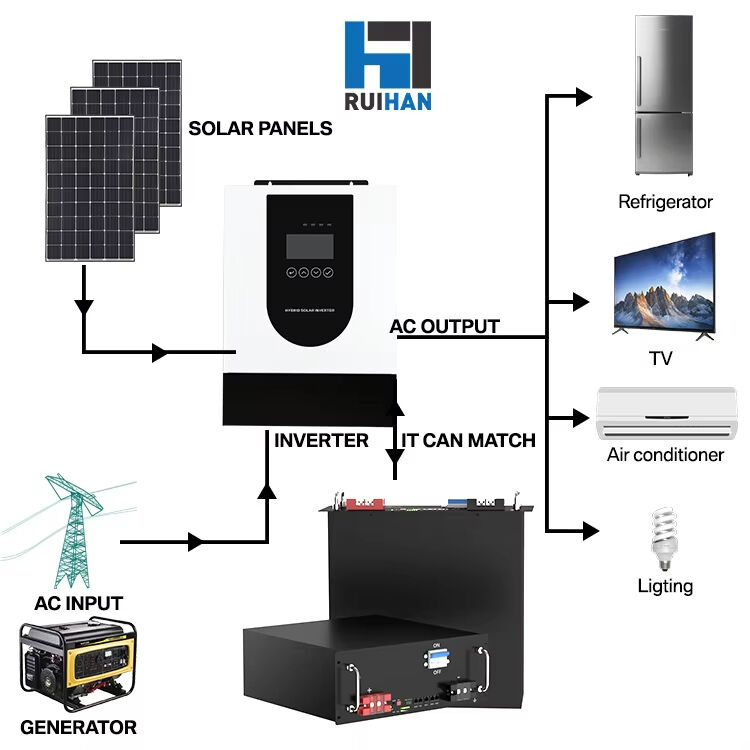
Why High-Capacity Solar Batteries Deliver Longer Off-Grid Duration
Usable Capacity vs. Rated Capacity: The Real Determinant of Solar Battery Runtime
The number listed as a solar battery's capacity, say 15 kWh, doesn't mean that's all the power it can give. When talking about how long these batteries last when disconnected from the grid, what really matters is called usable capacity. This refers to how much energy can be drawn out before the battery starts losing its ability to hold charge over time. Lithium iron phosphate batteries, which are newer technology, generally allow around 80 to 95 percent of their stored energy to be used safely. Older lead acid models aren't nearly as good though, usually only letting about half their stored energy be accessed. According to Prishda Energy research from 2023, this makes a big difference in practice. Take a 10 kWh lithium battery for example. With 90% depth of discharge, it actually provides roughly 9 kWh worth of electricity. That extra usable power means longer protection against power cuts when the grid goes down.
Case Study: Franklin APower2 (15 kWh) vs. Tesla Powerwall 3 (13.5 kWh) in a 72-Hour Off-Grid Scenario
Consider a household consuming 20 kWh daily. In a simulated grid failure, two high-capacity batteries were evaluated:
| Metric | Franklin APower2 (15 kWh) | Tesla Powerwall 3 (13.5 kWh) |
|---|---|---|
| Usable Capacity (90% DoD) | 13.5 kWh | 12.15 kWh |
| Hours Supported | 65 hours | 58 hours |
| Critical Load Coverage | 100% through Day 3 | Failed at Hour 58 |
APower2 actually gives users around seven extra hours of power when they need it most, which explains why real off grid freedom comes down to what's actually usable in those batteries instead of just looking at the numbers on paper. Most folks who want their systems to last several days without backup need to plan for at least three to five days worth of stored energy. Why? Because sometimes clouds hang around longer than expected or there might be problems getting supplies delivered. The Off Grid Battery Sizing Guide makes this point pretty clearly, but experience shows that planning ahead pays off big time when the weather doesn't cooperate.
How to Size a Solar Battery for Targeted Energy Duration
Matching kWh Capacity and kW Power Output to Household Load Profiles
Getting the right size means matching two key specs to what actually happens in your home. First up is usable capacity measured in kilowatt hours (kWh), which basically tells us how long our stored energy will last during an outage. Then there's the power output part - both continuous and surge ratings in kilowatts (kW) determine whether multiple big appliances such as heat pumps, water wells, or electric vehicle charging stations can operate at once without tripping the system. Before anything else, take a good look at those past year's worth of electricity bills and usage records to get a clearer picture of what we're dealing with here.
- Average daily kWh consumption
- Peak kW demand windows (e.g., early evening + HVAC cycling)
- Seasonal variations (e.g., summer cooling loads spiking 30–40%)
For example, a home averaging 25 kWh/day with a 5.5 kW peak load needs a battery that sustains both baseline energy delivery and brief 7–8 kW surges. Undersizing risks mid-outage depletion; oversizing adds cost without proportional benefit.
Step-by-Step Sizing Methodology: From Daily kWh Consumption to Multi-Day Reserve Goals
Use this field-validated approach to determine optimal capacity:
- Calculate baseline consumption: Use annual utility data. For full-home backup, average daily kWh. For critical-load-only systems, isolate essentials (e.g., fridge: 1.5 kWh/day; LED lighting: 0.5 kWh/day; modem/router: 0.3 kWh/day).
- Multiply by target autonomy days: For storm resilience, 2–3 days is standard; remote or high-risk locations may require 4–5. Example: 20 kWh/day — 3 days = 60 kWh reserve.
- Adjust for DoD: Divide required usable energy by the battery’s usable DoD. A 60 kWh reserve at 90% DoD demands a 66.7 kWh rated capacity (60 ÷ 0.9).
- Verify power compatibility: Confirm the battery’s continuous and surge kW ratings exceed your highest simultaneous load—e.g., well pump (2.2 kW) + furnace blower (1.8 kW) + refrigerator compressor (0.8 kW) = 4.8 kW minimum continuous rating.
This method ensures robust, cost-effective backup—grounded in real load behavior and manufacturer performance limits.
Maximizing Solar Battery Duration Through Smart Depth of Discharge Management
How Modern BMS Enables Adaptive DoD Without Sacrificing Lifespan
Modern Battery Management Systems (BMS) have moved past those old fixed Depth of Discharge (DoD) limits. Instead they dynamically adjust how much energy gets used depending on what's happening around them. Think about factors like how the battery is being used, current temperatures, and even what the power grid might do next. On regular days, most BMS will keep discharge levels around 40% DoD. Why? Because doing so can extend battery life dramatically—from roughly 600 full cycles down to about 3,000 partial ones. But when there's a blackout situation, these smart systems let batteries drain much further, sometimes up to 95%, giving users maximum runtime when they need it most. What makes all this work? Real time monitoring through things like voltage checks, temperature sensors, and looking back at charging history patterns. Some newer systems take it one step further by actually checking weather reports and planning ahead based on seasonal usage trends. For instance, they might build up extra reserves before a big storm hits while letting batteries run low during nice weather periods. The whole point here is to stop those damaging deep discharges that kill battery capacity over time, while still making sure people have reliable backup power exactly when they need it.
FAQs
What is the difference between rated and usable capacity in solar batteries?
Rated capacity is the total amount of energy a battery can store, while usable capacity is the portion of that energy that can actually be used before the battery's lifespan is affected.
Why should one focus on usable capacity when choosing a solar battery?
Usable capacity determines how long the battery can support your home during an outage, impacting the total off-grid duration and reliability.
How does Depth of Discharge (DoD) affect battery life?
Depth of Discharge refers to how much of the battery's total capacity is used. Managing DoD wisely prolongs battery life and improves overall efficiency.
How do modern Battery Management Systems (BMS) improve solar battery performance?
Modern BMS dynamically manage DoD, adjust for environmental factors, and extend battery life by optimizing energy usage according to real-time conditions.
What steps should I follow to size a solar battery for my home?
The steps include calculating baseline consumption, multiplying by target autonomy days, adjusting for DoD, and verifying power compatibility to ensure adequate and cost-effective backup.
Table of Contents
- Why High-Capacity Solar Batteries Deliver Longer Off-Grid Duration
- How to Size a Solar Battery for Targeted Energy Duration
- Maximizing Solar Battery Duration Through Smart Depth of Discharge Management
-
FAQs
- What is the difference between rated and usable capacity in solar batteries?
- Why should one focus on usable capacity when choosing a solar battery?
- How does Depth of Discharge (DoD) affect battery life?
- How do modern Battery Management Systems (BMS) improve solar battery performance?
- What steps should I follow to size a solar battery for my home?