
 EN
EN



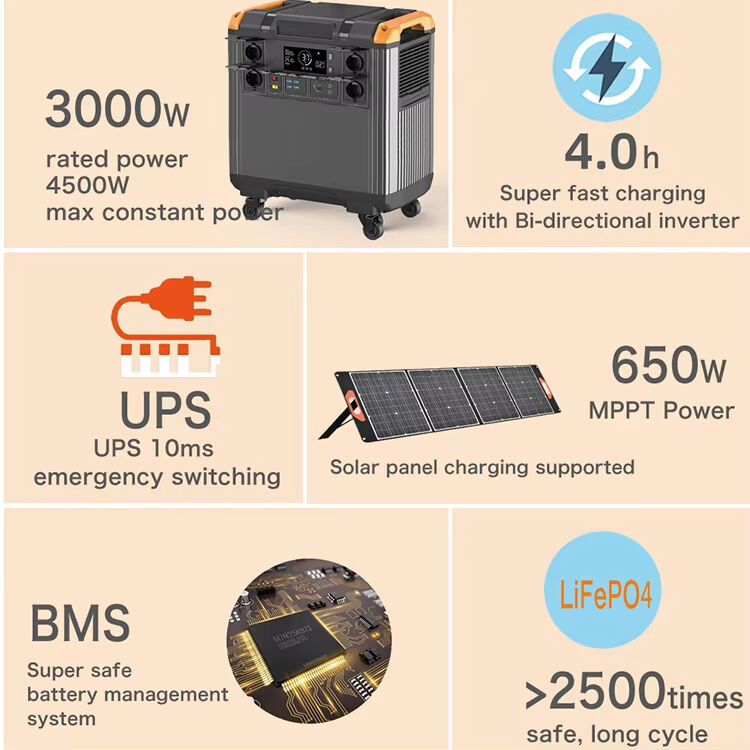
Portability and Silent Operation for Rapid Outdoor Deployment
Lightweight, ergonomic design with integrated handles for rugged terrain access
Designed specifically for quick setup by just one person during crises situations, solar generators stand out from traditional models. These devices usually weigh less than 50 pounds and have a small footprint, so they can be carried easily across rough ground without much trouble. The handles are built strong and there's extra protection on the corners too, which helps grab onto something stable when moving past fallen branches or climbing over rocks. Traditional generators need gas and often take more than one person to move around, sometimes requiring special carts. But solar versions work right away as long as there's sun shining down on them. That makes all the difference when roads get washed away during floods or blocked off by wildfires, leaving people stranded without power options.
Near-silent performance (<45 dB) – safe for indoor use during emergencies
Solar generators run below 45 decibels, which is actually quieter than regular talking. They get rid of all those annoying sounds from gas powered equipment that can be so disruptive. Because they're practically silent, these generators work great indoors when there are medical issues going on. For instance, they can power CPAP machines or oxygen concentrators without waking anyone up or getting in the way of doctors and nurses talking to patients. No engine rumble means people can still hear what's happening around them in places where security matters a lot. Plus, folks stuck in tight shelters won't have their sleep ruined by constant generator noise either. Tests show the sound level is about the same as a home fridge running, so they can stay on all night in tents, cars, or makeshift homes without anyone noticing anything strange or feeling unsafe.
Fuel-Free, Grid-Independent Power Generation
Solar recharging eliminates fuel logistics, supply chain risks, and emissions
Solar generators sidestep many problems that plague traditional fuel-based power sources because they turn sunlight straight into electricity without needing any gas or oil. No need to store dangerous fuels anymore, no worrying about prices going through the roof overnight, and definitely no headaches trying to transport heavy tanks across flooded roads during emergencies. When disaster strikes and regular power lines go down or streets become unusable, these solar setups keep running without missing a beat. From an environmental standpoint, we're talking about roughly 1.5 tons less carbon dioxide per year for each system according to research from Ponemon Institute back in 2023. And financially? The savings add up fast too – around $740 saved yearly on fuel alone cuts overall costs nearly in half compared to what most businesses spend on standard generators. Plus there's something reassuring about not having explosive materials sitting around in places where people gather, whether it's temporary housing after a storm or portable clinics set up in remote areas.
Real-world validation: Maui wildfires (2023) – solar generators sustained critical medical devices for 72+ hours
When the Maui wildfires hit in 2023, everything went dark pretty fast. Power grids crashed and gas stations were empty, so regular electricity just wasn't an option anymore. But solar generators kept working where others failed. They powered oxygen machines, kept insulin cold, allowed people to call for help via satellite phones, and lit up shelters even though thick smoke made sunlight scarce. Doctors actually saw these units running nonstop for over three days straight without needing any fuel changes, producing zero pollution and staying cool enough to touch. People who needed special breathing treatments survived because of this reliability at a time when hospitals couldn't handle all the patients and their emergency generators simply stopped working after a day or two. What happened there shows why solar tech matters most exactly when roads get blocked and stores run out of supplies.
Proven Reliability in Harsh Outdoor and Disaster Conditions
IP65-rated enclosures, advanced thermal management, and wide-temperature operation (-10°C to 45°C)
Built for actual disaster scenarios, high performance solar generators come with IP65 rated enclosures that keep out all dust and stand up to water jets coming from anywhere. These generators stay functional even when faced with heavy rain, blowing sand in deserts, or salty air near coasts. The systems also have advanced thermal management that keeps batteries and inverters at their best temperatures no matter how extreme the outside conditions get. This helps avoid losing power capacity and stops components from wearing out too fast. Temperature control becomes really important between -10 degrees Celsius and 45 degrees Celsius. Regular lithium batteries tend to lose around 30% of their capacity when it gets below freezing according to Energy Storage Journal from 2023, while units with proper thermal regulation maintain consistent power output. When paired with strong vibration resistance similar to what's found in military equipment, these features mean about 98% continuous operation during extended deployments through hurricanes, wildfires, or blizzards where traditional generators typically give up after just 12 hours of running.
Scenario-Specific Versatility for Critical Outdoor Emergencies
Life saving equipment relies on steady power supply during emergencies. Think about CPAP machines keeping people breathing, refrigerators preserving critical medications, communication devices staying online, and LED lights providing visibility when darkness falls. Solar powered generators offer exactly what's needed for these urgent requirements. These systems produce clean, stable electricity through their pure sine wave technology, while the programmable outlets ensure compatibility with delicate medical gear. Traditional gas generators often cause problems for sensitive electronics, sometimes even rendering them useless at crucial moments. Real world testing during large scale disasters has shown these solar units maintaining operation where other power sources fail, making all the difference in emergency response scenarios.
- CPAP and BiPAP machines, enabling uninterrupted respiratory therapy during extended outages
- Refrigerated medications, maintaining strict temperature control for insulin, epinephrine, and biologics
- Satellite phones, radios, and GPS devices, preserving lifelines to rescue coordination
- LED lighting systems, supporting safe navigation, triage, and nighttime operations
This scenario-specific reliability transforms solar generators from auxiliary backups into frontline emergency assets–operating dependably in remote, off-grid, or infrastructure-compromised environments where every watt supports survival.
FAQ
What are the advantages of solar generators over traditional generators?
Solar generators are lightweight, portable and require no fuel, making them ideal for rapid deployment in emergencies. They are also silent, environmentally friendly and cost-effective in the long run.
How long can solar generators operate continuously during emergencies?
Solar generators can sustain critical operations for over 72 hours, as demonstrated during events like the Maui wildfires, thanks to their solar recharging capability and high efficiency.
Are solar generators suitable for harsh weather conditions?
Yes, high-performance solar generators are built with IP65-rated enclosures and advanced thermal management, making them highly reliable in harsh outdoor and disaster conditions.