
 EN
EN



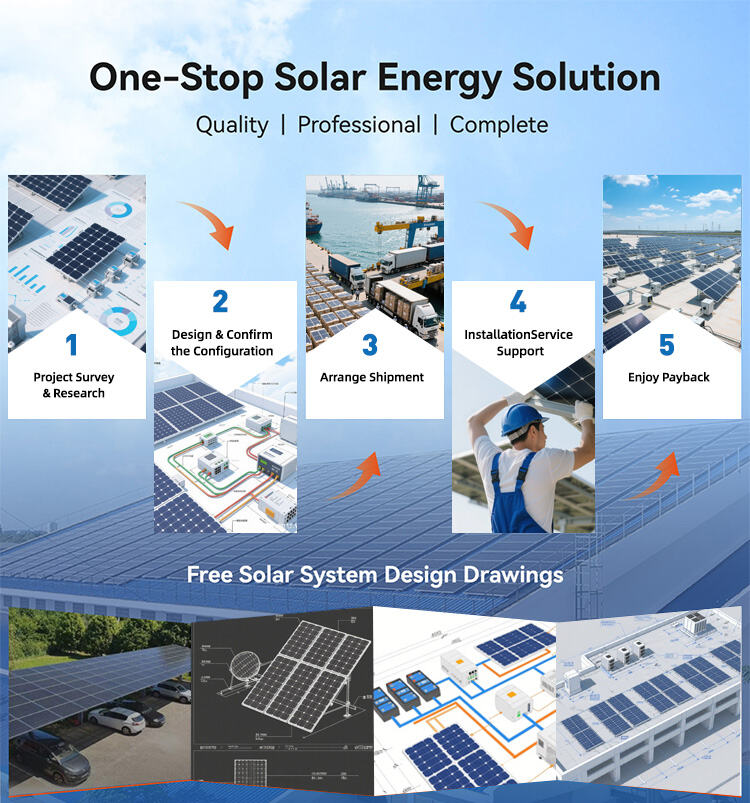
Core Photovoltaic System Components and Energy Conversion Principles
How PV Modules, Inverters, Charge Controllers, and Batteries Enable Reliable Power Generation
Solar panels, also known as photovoltaic modules, work by turning sunlight into direct current electricity through semiconductor materials, mostly silicon, thanks to what's called the photovoltaic effect. Once generated, this DC power needs to be converted into something we can actually use for our homes and businesses. That's where inverters come in handy, transforming the direct current into alternating current that matches the voltage levels and frequencies required by most electrical devices connected to the grid. Between the solar panels and batteries sits another important component called charge controllers. These little guys manage how much energy flows back and forth, stopping problems like overcharging or letting batteries drain too much, both issues that shorten battery life significantly, sometimes cutting it in half. For those relying on solar power without access to traditional grids, energy storage batteries are essential. They kick in when there's not enough sun shining or if the main power goes down, allowing people living off-grid to have reliable electricity around the clock. Even for systems connected to regular power lines, having good battery storage makes these setups much more resilient against power disruptions.
Together, these components form an integrated, resilient power ecosystem:
- PV modules serve as the primary renewable energy harvesters
- Charge controllers preserve battery health and maximize cycle life
- Inverters ensure seamless compatibility with AC loads and utility infrastructure
- Batteries deliver continuity of supply when generation is insufficient
Properly sized systems maintain stable output even during irradiance drops of up to 30%, while redundant configurations mitigate single-point failures for mission-critical applications.
The Photovoltaic Effect in Action: From Sunlight to Usable AC/DC Power in Both System Types
When photons from sunlight strike a PV cell’s semiconductor layer, they excite electrons, creating electron-hole pairs that generate DC electricity—a process known as the photovoltaic effect. This raw DC energy follows distinct conversion pathways depending on system architecture:
| System Type | Energy Conversion Process |
|---|---|
| Off-Grid | DC → Charge Controller → Battery Storage → Inverter → AC Appliances |
| Grid-Tied | DC → Inverter → AC Loads/Grid Export (excess power feeds utility via net metering) |
Charge controllers keep batteries safe when they're charging, and inverters make sure AC equipment runs properly and efficiently in all setups. For grid-tied systems, the inverters need to meet certain standards like those set by IEEE 1547 so they can match up with the utility power in terms of phase, frequency, and voltage levels. This synchronization is really important because it allows for seamless switching back and forth between solar power and regular grid electricity whenever there are clouds passing through or sudden changes in how much power something needs to run.
Off-Grid Photovoltaic Systems: Designing for Autonomy and Resilience
Sizing, Redundancy, and Load Management Strategies for Uninterrupted Remote Power Supply
Creating dependable off-grid solar power systems takes serious engineering work since there's no backup from the regular electricity grid. Getting the size right starts with looking at how much power gets used at different times and understanding how sunlight changes throughout the seasons. Solar panels need to produce extra energy in winter when days are short, and batteries should be able to keep things running for several days straight during those cloudy spells that happen sometimes. Most experienced installers suggest going ahead and buying batteries that are 20 to 30 percent bigger than what calculations show needed. This gives some breathing room as batteries naturally lose their ability to hold charge over time, which helps avoid system failures down the road when everyone least expects them.
When it comes to system reliability, redundancy just isn't optional anymore. Systems need things like dual charge controllers, those modular inverters we've been talking about, or parallel battery configurations to make sure there's no single point where everything fails at once. Speaking of smart systems, let's talk about load management. The programmable controllers really shine here. During power shortages they know exactly which circuits matter most and will cut power to things like HVAC systems or lights that aren't absolutely necessary. This helps stretch out how long the backup power lasts. And get this - some advanced automation setups can actually move around when certain high power tasks happen. Think about shifting water heating schedules or timing battery charges so they line up with when the solar panels are producing the most electricity. Makes sense right? It's all about making the most of what resources we have available.
This integrated approach—combining precise sizing, strategic redundancy, and adaptive load control—delivers uninterrupted power for remote operations, healthcare facilities, telecommunications hubs, and other critical infrastructure, regardless of weather or component degradation.
Grid-Tied Photovoltaic Systems: Optimizing Efficiency, Economics, and Grid Synergy
Net Metering, Utility Interconnection Standards, and Real-Time Energy Export Benefits
For businesses looking at grid-connected solar panels, there are some serious financial benefits when it comes to running costs thanks to net metering and how these systems work with the smart grid. Most companies that participate in net metering send extra power back to the main grid when their solar panels are producing more than needed. The electric meter actually spins backward during these times of high production. What does this mean for wallets? Well, studies show businesses can cut their yearly power bills anywhere from 40% down to around 70%. Of course, actual savings depend heavily on where they're located and exactly how big their solar installation is relative to energy needs throughout different seasons.
Compliance with utility interconnection standards—particularly IEEE 1547—is mandatory for safe, stable grid integration. These standards govern voltage regulation, frequency response, anti-islanding protection, and ride-through capabilities during grid disturbances. Adherence ensures power quality, prevents backfeed hazards, and avoids costly rework or interconnection denials.
Energy exports in real time really boost what solar systems can do for businesses these days. A lot of power companies are starting to pay extra or give incentives when solar panels feed electricity back into the grid during those busy times when electricity costs hit their highest points. When solar installations match their output with moments when the power grid is under pressure, they actually help keep everything running smoothly while getting paid better rates. This turns regular solar setups into something special - not just cutting costs but also supporting the whole electrical network at the same time.
Selecting the Right Photovoltaic Solution: Key Decision Factors for Commercial and Industrial Buyers
Total Cost of Ownership, Scalability, Regulatory Compliance, and Future-Proofing Considerations
Commercial and industrial buyers must weigh four interdependent factors when selecting photovoltaic systems.
Total cost of ownership (TCO) isn't just about what something costs when we buy it. There's actually a lot more to consider over time. Maintenance throughout the product's life, how performance drops off as components age, when inverters need replacing, financing arrangements, plus all those government incentives at both federal and state levels matter too. Take the Federal Investment Tax Credit (ITC) for example. Right now it gives folks who install eligible systems a nice 30% tax break. When companies do proper TCO analysis using standards set by organizations such as NREL and SEIA, they often find ways to cut down their ongoing expenses anywhere between 30% and 40%. Makes sense really, because looking at everything together rather than just initial price tags leads to smarter spending decisions in the long run.
Second, scalability demands modular, interoperable designs that grow alongside energy demand—especially vital for manufacturing plants, data centers, or distribution hubs planning phased expansion. Systems built with standardized mounting, communication protocols (e.g., Modbus, SunSpec), and expandable inverters avoid costly retrofits.
Third, regulatory compliance spans local building codes (e.g., IBC, IRC), fire safety standards (NFPA 1, NEC Article 690), and utility-specific interconnection requirements. Noncompliance risks project delays, penalties averaging $50,000 per violation, and insurance exclusions—making early engagement with AHJs and utilities essential.
Finally, future-proofing means selecting components compatible with emerging technologies: battery-ready inverters, smart meter interfaces, and communications-ready controllers support seamless integration of storage, demand response, and grid services. As markets evolve toward distributed energy resources (DERs) and virtual power plants (VPPs), forward-looking architecture preserves optionality and long-term asset value.
A balanced evaluation across these dimensions ensures photovoltaic investments deliver both immediate ROI and enduring operational resilience at scale.
FAQ Section
What is the photovoltaic effect?
The photovoltaic effect is a process by which solar panels convert sunlight into direct current (DC) electricity using semiconductor materials.
Why are inverters essential in a photovoltaic system?
Inverters convert DC electricity to alternating current (AC) electricity, which is necessary for most home and business applications.
What role do charge controllers play in solar power systems?
Charge controllers manage the energy flow between solar panels and batteries, preventing issues like overcharging or draining, which can reduce battery life.
How does battery storage enhance photovoltaic systems?
Battery storage provides a reliable supply of electricity when solar generation is insufficient, especially in off-grid setups or during power disruptions.
What is net metering?
Net metering allows excess power generated by solar panels to be fed back into the grid, offsetting electricity bills by crediting the excess generation.
Table of Contents
- Core Photovoltaic System Components and Energy Conversion Principles
- Off-Grid Photovoltaic Systems: Designing for Autonomy and Resilience
- Grid-Tied Photovoltaic Systems: Optimizing Efficiency, Economics, and Grid Synergy
- Selecting the Right Photovoltaic Solution: Key Decision Factors for Commercial and Industrial Buyers