
 EN
EN



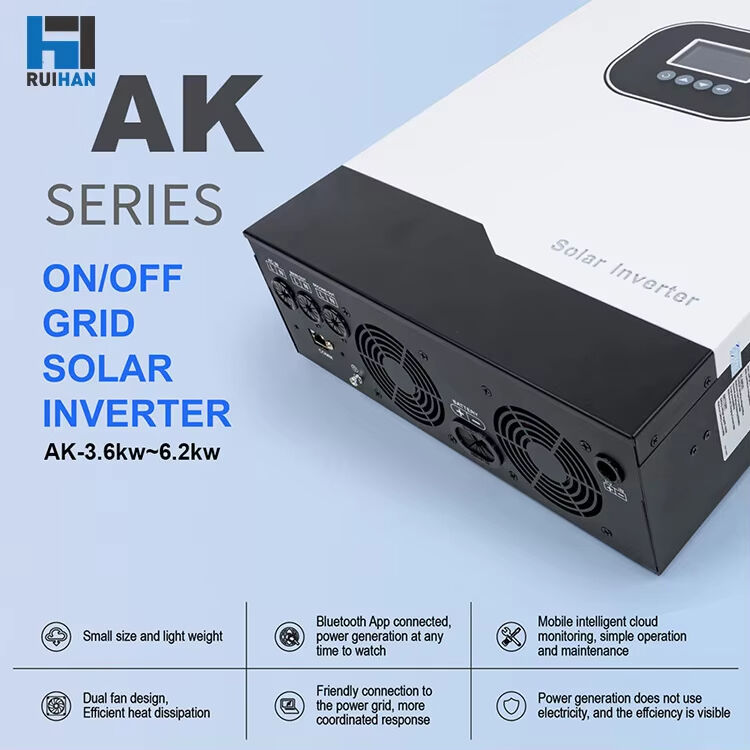
Size Your Solar Inverter Correctly for Off-Grid Load and Battery Voltage
Calculate Continuous and Surge Wattage Based on Real-World Load Profiles
Begin by making a list of every appliance that needs power at once. Then add up their running wattages to figure out what the system will handle continuously. Don't forget about those startup spikes either. Refrigerators, well pumps, and air conditioner compressors can pull anywhere from three to five times their normal wattage when they kick on. Take that 500 watt fridge for instance it might actually need around 2000 watts just to get going. Throw in an extra 20 percent cushion on top of everything combined so nothing gets overloaded when multiple things start at once. Get this wrong and undersized inverters simply shut down while ones that are too big just run inefficiently and cost more than necessary without any real benefit. Want precise numbers? Forget what's printed on the label. Grab a plug in watt meter instead because actual energy use tends to differ quite a bit from manufacturer claims.
Match Inverter DC Input Voltage (12V, 24V, 48V) to Your Battery Bank for Efficiency and Safety
Your battery bank’s nominal voltage dictates inverter compatibility—and directly impacts system efficiency, safety, and wiring costs. At equal power, a 48V system halves current versus 24V and quarters it versus 12V, dramatically reducing resistive losses, heat buildup, and required conductor size. As a rule of thumb:
- ≤1,500W systems: 12V is acceptable for simplicity and low-cost setups (e.g., small RVs).
- 1,500–3,000W systems: 24V strikes the best balance of efficiency and component availability.
- >3,000W systems: 48V is strongly recommended—mandatory for safety, scalability, and minimizing voltage drop across long cable runs.
Mismatched voltages cause efficiency losses up to 25%, accelerated component wear, and potential damage to both inverter and batteries. Always confirm your battery bank’s nominal voltage before selecting an inverter—and ensure charge controllers and other DC-coupled devices share the same voltage architecture.
Ensure Pure Sine Wave Output and Integrated Inverter-Charger Capability
Why Pure Sine Wave Is Essential for Sensitive Electronics and System Longevity
Pure sine wave inverters give us clean, stable AC power similar to what comes out of regular wall outlets, without all those pesky distortions. They're basically essential if someone wants to live off the grid these days. Modified sine wave inverters create those stepped, irregular waveforms that we don't want at all. The good news is that pure sine wave tech brings down total harmonic distortion (THD) to under 3%, so motors run quietly, medical gear works properly, AV systems sound great, and everything with a microprocessor runs smoothly without getting hot. Those distorted signals from cheaper inverters cause annoying buzzes, make things overheat, create interference with other electronics, and can actually shorten how long devices last, particularly with things like variable speed drives or switch mode power supplies. When building an off grid system, going with pure sine wave isn't just better it's really necessary for keeping important equipment safe and making sure all connected devices last longer.
Inverter-Charger Functionality: Seamless AC Generator Support and Efficient Battery Recharging
Combining an inverter and charger into one unit gets rid of needing multiple separate parts while making energy management smarter overall. When there's extended bad weather or times when power demand spikes, these systems can take AC power from backup generators or shore connections, then manage battery charging stages like bulk, absorption, and float at just the right voltages and current levels. This helps avoid those harmful deep discharges that shorten battery lifespan, which matters a lot for lithium batteries and AGM types since they need very specific voltage control. Better models come with settings for custom charge profiles, adjust charging based on temperature changes, and even have logic to start and stop generators automatically. Anyone running off-grid setups in remote cabins, emergency shelters, or mobile installations where regular electricity isn't available or trustworthy finds this dual purpose feature invaluable. It keeps power flowing without interruption and makes designing, maintaining, and ensuring reliable operation over years much simpler than traditional approaches.
Key Advantages of Pure Sine Wave vs. Modified Sine Wave
| Feature | Pure Sine Wave | Modified Sine Wave |
|---|---|---|
| Waveform Quality | Smooth, grid-mimicking output | Jagged, distorted output |
| Device Compatibility | Medical tools, motors, modern electronics | Basic appliances, resistive loads |
| Energy Efficiency | Up to 95% conversion efficiency | 10–15% lower efficiency |
| Acoustic Noise | Silent operation | Audible humming/buzzing |
| Component Lifespan | Extends device longevity | Accelerates wear and tear |
Assess Build Quality, Thermal Design, and Smart Scalability Features
IP rating, heatsink design, and premium components as reliability indicators
Off grid inverters face some pretty tough conditions out there. Dust gets everywhere, humidity fluctuates constantly, temperatures swing wildly from day to night, and these devices often run non stop for long periods. When shopping around, look for models rated at least IP65 or better. This means they can handle dust completely and stand up to light water spray, which matters a lot when installed outside or in places without climate control. Heat management matters just as much. Aluminum extruded heatsinks with good fin design plus forced air cooling where possible tend to shed heat about 40 percent quicker than those made from stamped steel. Most quality units come with built in thermal shutdown systems that kick in before things get too hot, along with derating curves that adjust output under heavy loads. Inside the box, manufacturers using industrial strength electrolytic capacitors, stronger printed circuit board traces, and circuits coated with protective material see field failures drop by roughly 60% over cheaper consumer parts, based on lab testing that speeds up normal wear and tear. All these factors together typically translate to about 30% extra lifespan in actual off grid applications across different climates and usage patterns.
Remote monitoring, over-the-air firmware updates, and parallel/stackable architecture
These days scalability and smart features aren't just nice to have anymore, they're pretty much essential for any operation worth its salt. With remote monitoring through web interfaces or mobile apps, operators get all sorts of useful information on hand. We're talking about things like current battery charge levels, how efficiently inverters are running, detailed fault records, and even where energy has been flowing historically—all this without needing anyone to physically visit the site. The over the air firmware updates really shine here too. They push out security fixes, address bugs, and roll out new features basically overnight. This cuts down on downtime risks significantly, maybe around half compared to when people had to do updates manually back in the day. Systems built with parallel and stackable designs allow adding more inverters as needed. The units will automatically sync up their phase, frequency settings, and voltage levels so expanding capacity becomes straightforward without tearing everything apart or starting from scratch. Throw in some predictive diagnostics tools along with adjustable alert settings and suddenly what was once just regular equipment turns into something much smarter. It evolves right alongside our needs instead of becoming obsolete after a few years.
Compare Top-Rated Off-Grid Solar Inverters by Use Case and Budget
Picking out the correct solar inverter really comes down to matching what it can do with how much power someone actually needs, not just looking at those peak numbers on paper. Small setups like cabins, RVs, or emergency backup systems work well with these compact 3,000W stackable inverters. These models are pretty affordable to start with and leave space for expansion later. What makes them stand out is their portability factor, minimal power drain when sitting idle, plus they play nicely with those smaller 12V and 24V battery packs. When we get to mid sized homes or workshops needing between 3 and 6 kW, going for integrated 5,000W inverter chargers becomes smart choice. Look for ones that produce clean sine waves, handle batteries properly through multiple stages, and carry that UL 1741 SA certification mark. These units strike good balance for everyday stuff like keeping fridges running, lights on, computers working etc. For bigger installations over 6,500W where everything runs off solar power, industrial strength inverters become necessary. These need parallel ready designs, solid heat management systems, and must support those high voltage lithium battery configurations too. Such equipment proves invaluable in places like farms, medical facilities far from grid access, or any location where uninterrupted power supply matters most.
| System Scale | Key Inverter Features | Typical Applications |
|---|---|---|
| Small (≤3kW) | Stackable design, budget-friendly | Cabins, RVs, backup circuits |
| Medium (3-6kW) | Integrated charger, pure sine wave output | Full-time small homes, workshops |
| Large (>6kW) | Parallel support, heavy-duty cooling | Whole-house systems, farms |
For any installation size, it makes sense to go with UL 1741 certified equipment that hits at least 90% efficiency at its best performance and comes with built in surge protection features. The better quality systems do cost about 15 to 30 percent more upfront, but they last well over a decade typically require much less maintenance work, and generate significantly better power output over time. Real world tests from 2024 looking at return on investment for renewable energy setups show these premium options actually end up costing less overall when considering all factors. Both homeowners and businesses going off grid have seen this pattern repeat itself consistently across different applications.
FAQ
What is the difference between pure sine wave and modified sine wave inverters?
Pure sine wave inverters deliver clean, grid-like AC power essential for sensitive electronics and overall system longevity, whereas modified sine wave inverters produce stepped, irregular waveforms that can cause buzzing, overheating, and reduced equipment lifespan.
Why is it important to match inverter voltage with battery bank voltage?
Matching inverter DC input voltage with battery bank voltage is crucial to maximize efficiency, ensure safety, and minimize component wear and potential damage due to voltage mismatches.
How do I determine the right inverter size for my off-grid setup?
Calculate the total running wattage of all appliances to determine continuous load requirements, add extra wattage to accommodate startup spikes of appliances like refrigerators, and choose an inverter size that provides a 20% margin above these combined needs.
What are the advantages of an inverter-charger unit?
Inverter-charger units streamline energy management by integrating inverter and charger functions, enabling efficient battery charging, seamless transition between power sources, and protection against deep discharges.
What should I look for in off-grid solar inverters to ensure longevity and reliability?
Look for features like pure sine wave output, IP ratings (IP65 or better), robust thermal design, premium components, remote monitoring capabilities, and UL 1741 certification to ensure longevity and reliability.