
 EN
EN


Unmatched Power Quality for Sensitive Electronics
How low THD (<3%) prevents damage to medical devices, audio gear, and digital equipment
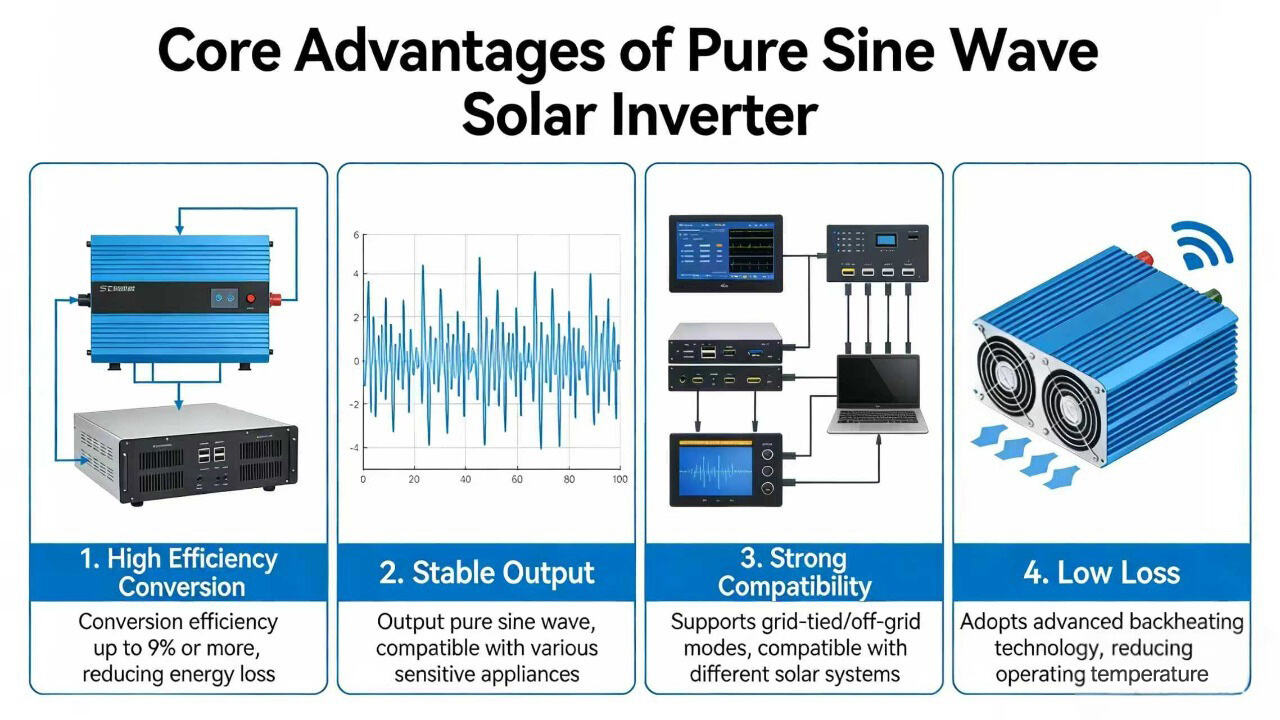
Keeping Total Harmonic Distortion (THD) under 3% matters a lot when protecting delicate electronic equipment. When THD gets too high, it creates voltage fluctuations that can actually melt down circuits inside things like insulin pumps, mess up the quality of recordings in professional studios, and even garble data being processed by computers. Those modified sine wave inverters are notorious problems because they frequently push past 40% THD levels, creating weird waveform issues that slowly cook components until they give out early. On the flip side, pure sine wave solar inverters produce power that looks almost identical to what comes from regular electrical grids, so they deliver steady electricity compatible with most appliances. The difference really counts for specialized equipment too. Most MRI machines need THD at or below 5% just to stay properly calibrated, whereas top shelf audio amplifiers will only work right if distortion stays below 1%, otherwise the music sounds nothing like the original recording.
Real-world comparison: CPAP reliability jumps from 45% to 92% with pure sine wave solar inverter
People with sleep apnea often find their CPAP machines work almost twice as reliably when they switch to pure sine wave solar inverters instead of the cheaper modified ones. Those modified models tend to mess things up pretty regularly, flashing error messages or shutting down suddenly because of those voltage spikes that don't play nice with the CPAP's tiny computer chips and motor parts. Some real world testing done overnight showed something interesting too - failure rates went way down, dropping from around 55% all the way to just 8% when people used the pure sine wave tech. What makes this happen? Well, basically these better inverters keep the voltage steady and produce cleaner waveforms that prevent the compressor from getting stuck and cutting therapy short. For folks living off the grid who absolutely need their breathing support every night without fail, this means fewer health problems down the road and CPAP machines that last much longer between replacements.
Broad Load Compatibility — From Inductive Motors to Modern Appliances
Why refrigerators, power tools, and microwaves operate cooler, quieter, and longer
The physics of magnetic field rotation and capacitor charging in AC loads
When working with inductive loads, they depend on smooth sinusoidal currents to create those rotating magnetic fields necessary for generating torque and motion. If there's any waveform distortion happening though, it messes up the whole process. Motors end up pulling extra current just to keep producing what they need, which leads to more heat being generated somewhere around 18 to 22 percent higher than normal. Looking at capacitive components found in today's electronics, these actually need gentle voltage increases for proper charging without damaging anything. That's where pure sine wave inverters come into play, offering exactly that kind of controlled voltage rise. Unlike modified sine waves that jump around suddenly, causing problems like overcharging, putting stress on dielectrics, and wearing down insulation materials over time. The way electromagnetic theory works together with clean power supply makes all sorts of different loads function smoothly side by side, maintaining efficiency levels while preventing premature equipment failure.
Higher Efficiency and Extended System Lifespan
94%+ conversion efficiency vs. 80–85% in modified sine wave: impact on battery drain and runtime
Pure sine wave solar inverters typically hit around 94% energy conversion efficiency, which beats modified sine wave models hands down those usually sit between 80 to 85%. The difference matters a lot in practice. When there's a 10% drop in efficiency, batteries end up working about 12% harder for the same amount of power needed. Let's put numbers to this concept: running something that needs 1,000 watts will pull only 1,064 watts from batteries when using a high efficiency inverter, but jumps all the way to 1,250 watts with one of the lower efficiency units. This extra bit makes a real difference too. Batteries last roughly 15 to 20% longer on each charge cycle, and they experience less strain during discharge cycles. Over time, this means batteries hold their capacity better and don't degrade as quickly as they would otherwise.
Reduced thermal stress on inverter components and connected devices
When there's harmonic distortion coming from modified sine wave outputs, it pushes electrical components - including parts within the inverter itself and whatever appliances are connected - past what they were designed to handle, which leads to extra heat generation. With pure sine wave tech, those distortions disappear completely, so the whole system stays at much better operating temperatures. Studies using thermal imaging have shown around 30 percent reduction in thermal stress for important bits like electrolytic capacitors and toroidal transformers. The cooler running conditions help prevent problems such as insulation failure, weakened solder joints, and changes in component parameters over time, which means inverters and appliances last longer before needing replacement. Plus, when things run cooler naturally, there's less need for additional cooling systems, making the whole setup more energy efficient in the long run.
Silent Operation and EMI-Free Integration for Off-Grid and Mobile Applications
Eliminating audible buzz and radio-frequency interference in RVs, cabins, and remote workspaces
Solar inverters that produce pure sine waves run pretty much silent because they switch at frequencies over 20kHz, which is way past what our ears can pick up. No more annoying buzz from cheap inverters that plague people living in RVs, tiny cabins in the woods, or even home office setups where quiet matters. These inverters come with built-in EMI suppression features like shielded components, better grounding techniques, and those filtered DC inputs we all love talking about but nobody really understands. All this stuff works together to keep radio frequency noise from messing up everything from Wi-Fi signals to Bluetooth devices, not to mention critical medical equipment that just cannot tolerate interference. Some actual field tests have measured around 15 dB less EMI compared to those modified sine wave models, making them perfect for places where reliable connectivity is essential, whether it's a doctor's clinic relying on telehealth services or workers who need stable internet access out in the middle of nowhere.
FAQ Section
What is Total Harmonic Distortion (THD)?
Total Harmonic Distortion (THD) is a measure of the distortion present in a waveform. It is the sum of the powers of all harmonic components of the signal compared to the power of the fundamental frequency. A low THD value indicates a cleaner power supply.
Why is THD important for sensitive electronics?
THD is crucial for sensitive electronics because high levels of distortion can cause voltage fluctuations leading to overheating, premature failure, and malfunction of devices like medical equipment, audio gear, and computers.
How do pure sine wave solar inverters benefit electronic devices?
Pure sine wave solar inverters provide clean and stable electrical energy similar to the power supplied by the electrical grid, preventing harmful voltage fluctuations and waveform issues, hence prolonging the lifespan and ensuring efficient operation of electronic devices.
Can pure sine wave inverters improve CPAP machine reliability?
Yes, pure sine wave inverters can significantly improve CPAP machine reliability by reducing voltage spikes and ensuring steady power supply, which reduces failure rates and extends equipment lifespan.