
 EN
EN



Calculate Your Off-Grid Energy Needs Accurately
Why Load Profiling Is the Critical First Step
Getting accurate energy demand calculations is absolutely essential for any solar power setup. When designing systems for off-grid living, load profiling matters most. This means taking stock of all household appliances, big ones like fridges down to small things such as LED bulbs. Most homes need somewhere around 10 to 20 kilowatt hours each day. However, hidden energy drains known as phantom loads plus seasonal changes make these numbers tricky. Winter months often require 30 to 40 percent more power than summer. People frequently overlook standby power consumption too, which leads to calculation mistakes sometimes over 50%. Skipping proper energy assessment can spell disaster when clouds hang around for days. Systems that are too small won't recharge batteries properly, leading either to early power outages or serious harm to battery life.
How to Estimate Daily kWh with Real-World Derating (20–30%)
Follow these steps to accommodate real-world inefficiencies:
- Audit appliances: Multiply measured wattage (use a clamp meter or Kill A Watt device) by daily usage hours
- Sum totals: Convert watt-hours to kWh (divide by 1,000)
- Apply derating: Add a 20–30% margin for inverter losses (¼10%), battery round-trip inefficiency (¼15%), panel soiling, and temperature-related degradation
| Derating Factor | Impact Source | Adjustment Needed |
|---|---|---|
| Environmental | Temperature/weather variances | +12–18% |
| System Losses | Wiring/charge controller | +8–10% |
| Future Expansion | Added appliances | +5% minimum |
For example: A calculated 15 kWh/day requirement becomes 18–19.5 kWh after derating—critical for sizing resilient solar arrays and battery banks. This buffer prevents shortfalls when clouds reduce panel output by 40–70% during peak overcast seasons.
Select Core Components for a Reliable Solar Energy System
Matching MPPT Charge Controllers to Panel Voltage and Battery Chemistry
MPPT charge controllers get the most out of solar panels by adjusting panel voltage to match what batteries need for charging. When setting up an off grid system, there are really just two things that matter most when picking one: whether it works with the voltage coming from the panels, and if it knows how to charge different types of batteries properly. The controller needs to handle at least 20 to 30 percent more voltage than what the panels produce when they're not connected to anything, because temperatures drop can cause voltage spikes. Getting the right charging pattern for the specific battery type is absolutely critical too. Lithium iron phosphate batteries want a steady current followed by a controlled voltage drop with exact cut off points, whereas traditional flooded lead acid batteries go through several distinct charging stages including bulk charging, absorption phase, and then finally float mode. According to recent testing done by NREL in 2023, using the wrong size or type of controller can waste around 30% of all available energy. Before buying anything, double check that the controller matches both the battery voltage (usually 12 volts, 24 volts or 48 volts) and the maximum current rating specified by the manufacturer.
Inverter Sizing and Type: Pure Sine Wave vs. Hybrid for Off-Grid Resilience
When choosing an inverter, there's a delicate balance between capacity needs, how clean the electrical waveform is, and what kind of smart features come along for the ride. Most folks forget about sizing properly for both regular stuff running all day long like fridges and lights, plus those big power spikes from things like well pumps or air compressors. A good rule of thumb? Add about 25% extra capacity beyond whatever calculations show as the highest power need. For gadgets that really care about electricity quality, pure sine wave inverters are absolutely necessary. Think medical equipment, variable speed motors, even newer appliances. These units deliver power almost identical to what comes from the grid, keeping harmonic distortion under 3%, which means no wasted energy or stressed components over time. Hybrid models bring something special to the table too. They can work with backup generators and automatically switch things over when battery levels get dangerously low, usually kicking in around 20% charge remaining. Always check the continuous power rating instead of just looking at peak specs. That 3kW hybrid might only reliably put out about 2.4kW ongoing. And don't overlook temperature effects either. As it gets warmer than room temperature, most inverters start producing less power, roughly losing 1% for every degree Celsius above 25°C.
Choose the Right Battery Storage for Long-Term Off-Grid Performance
Lithium Iron Phosphate vs. Flooded Lead-Acid: Lifespan, Efficiency, and Total Cost of Ownership
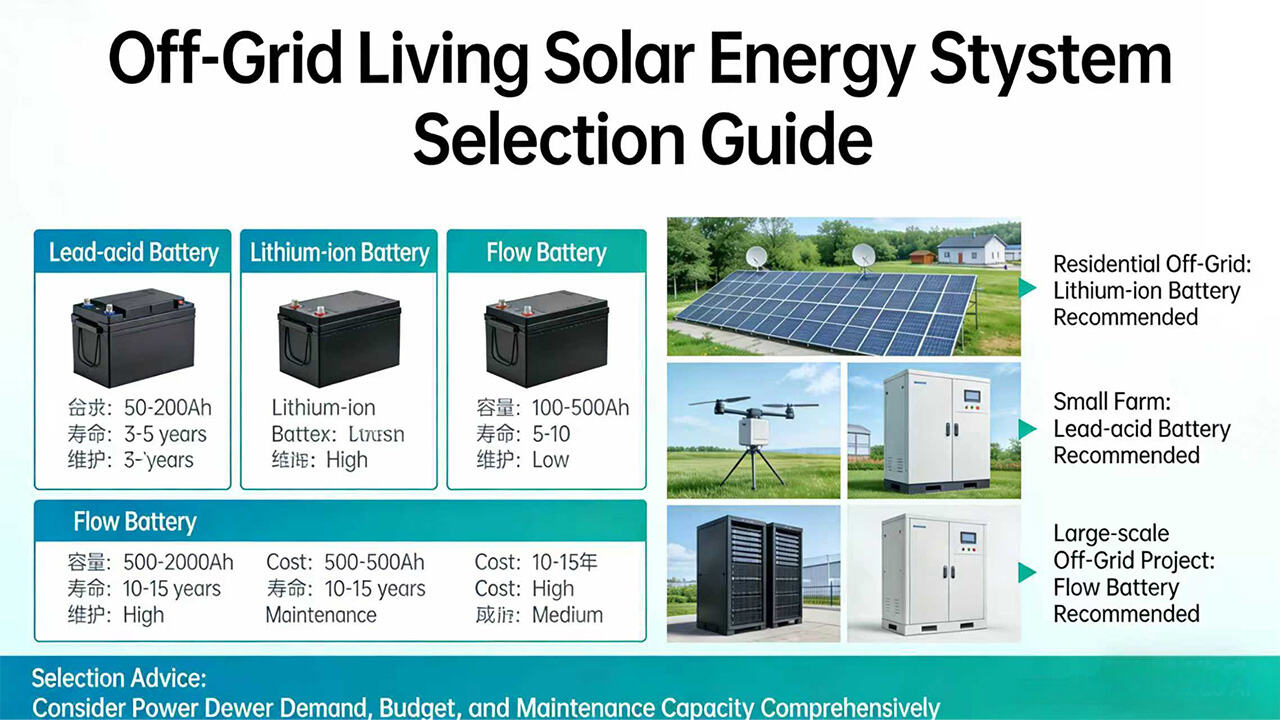
The chemical makeup of batteries plays a major role in determining how reliable they are over time and what kind of costs we're looking at. Take Lithium Iron Phosphate or LiFePO4 for instance. These batteries typically last around 10 years or more with efficiency rates between 95% and 98%. Compare that to traditional flooded lead-acid (FLA) batteries which only manage about 3 to 7 years of life and have efficiencies ranging from 70% to 85%. Sure, LiFePO4 comes with a bigger price tag initially, but here's where it shines: they can safely discharge between 80% and 90%, while FLA batteries max out at around 50%. This means systems using LiFePO4 need about 30% to 40% less capacity installed right from the start. And let's not forget about maintenance either. No need for regular watering like FLA batteries require, plus LiFePO4 can handle over 5,000 deep charge cycles before showing signs of wear. According to research from the Ponemon Institute in 2023, when energy storage systems fail, companies face an average loss of $740,000 due to downtime. That's why picking the right battery chemistry isn't just about cutting corners on expenses; it's actually making a smart investment in keeping operations running smoothly without unexpected interruptions.
Sizing for Autonomy: Balancing Capacity, Depth of Discharge, and Climate Factors
How long a battery system can run without sunlight is called battery autonomy, and this needs to match what kind of weather we actually get where we live. For places that don't see much sun most of the year, like parts of the Pacific Northwest in winter months or areas hit by regular monsoons, designers usually aim for around 3 to 5 days of autonomy. The formula goes something like this: take daily kilowatt hours needed, multiply by how many days of autonomy required, then divide by depth of discharge percentage to figure out what size battery bank is needed. Lithium iron phosphate batteries have better depth of discharge capabilities compared to flooded lead acid options, so they end up needing smaller banks while still giving the same level of backup power. Temperature though? That's another big factor altogether. When temps drop below freezing point, the usable capacity plummets somewhere between 20% and 30%. And if things heat up past 30 degrees Celsius, those batteries start wearing out way faster than expected. Good quality battery management systems help fight off these problems by actively controlling temperature and managing how much power gets drawn out at any given time. According to field tests conducted by BATRIES, adding about 15% to 20% extra capacity helps avoid situations where batteries get drained too deeply during periods when solar generation is low. This not only makes the whole system last longer but keeps voltages stable even when there's significant demand on the power supply.
FAQ
What is load profiling in off-grid systems?
Load profiling is the process of taking stock of all household appliances and determining their energy consumption to accurately calculate daily power needs.
How does derating affect solar energy calculations?
Derating involves adding a margin to accommodate inefficiencies such as inverter losses, battery inefficiency, and environmental factors, ensuring a more realistic energy requirement calculation.
What is battery autonomy?
Battery autonomy refers to the duration a battery system can operate without sunlight, critical for areas with limited sunny days.
How does battery chemistry impact cost and efficiency?
Lithium Iron Phosphate batteries provide longer lifespan and higher efficiency compared to Flooded Lead-Acid batteries, despite the higher initial cost.